Research and Markets: Future of the Nigerian Defense Industry - Market Attractiveness, Competitive Landscape and Forecasts to 2020

DUBLIN--(BUSINESS WIRE)--Research and Markets (http://www.researchandmarkets.com/research/d9jxmb/future_of_the) has announced the addition of the "Future of the Nigerian Defense Industry - Market Attractiveness, Competitive Landscape and Forecasts to 2020" report to their offering.
The Future of the Nigerian Defense Industry - Market Attractiveness, Competitive Landscape and Forecasts to 2020 provides readers with a detailed analysis of both historic and forecast defense industry values, factors influencing demand, the challenges faced by industry participants, analysis of industry leading companies, and key news.

Key Findings
- With a defense budget of US$2.0 billion in 2015, Nigeria is currently an attractive military spender in the African region
- Insurgency, piracy, oil smuggling, and peacekeeping operations are factors driving military expenditure
- The country's capital expenditure is expected to increase from US$0.23 billion in 2015 to US$0.3 billion in 2020, growing at a strong CAGR of 4.60% during the forecast period
- The government is expected to procure multi-role aircraft, attack helicopters, patrol vessels, armored personnel carriers, and other surveillance equipment
Key Topics Covered:
1. Introduction
2. Executive Summary
3. Market Attractiveness and Emerging Opportunities
4. Defense Procurement Market Dynamics
5. Industry Dynamics
6. Market Entry Strategy
7. Competitive Landscape and Strategic Insights
8. Business Environment and Country Risk
9. Appendix
Companies Mentioned
- Defence Industries Corporation of Nigeria (DICON)
- Dornier Aviation Nigeria AIEP Limited (DANA)
For more information visit http://www.researchandmarkets.com/research/d9jxmb/future_of_the
http://www.businesswire.com/news/home/20150804006128/en/Research-Markets-Future-Nigerian-Defense-Industry--
Explosion at bus station in Nigeria's capital
Last Updated Apr 14, 2014 7:08 AM EDT
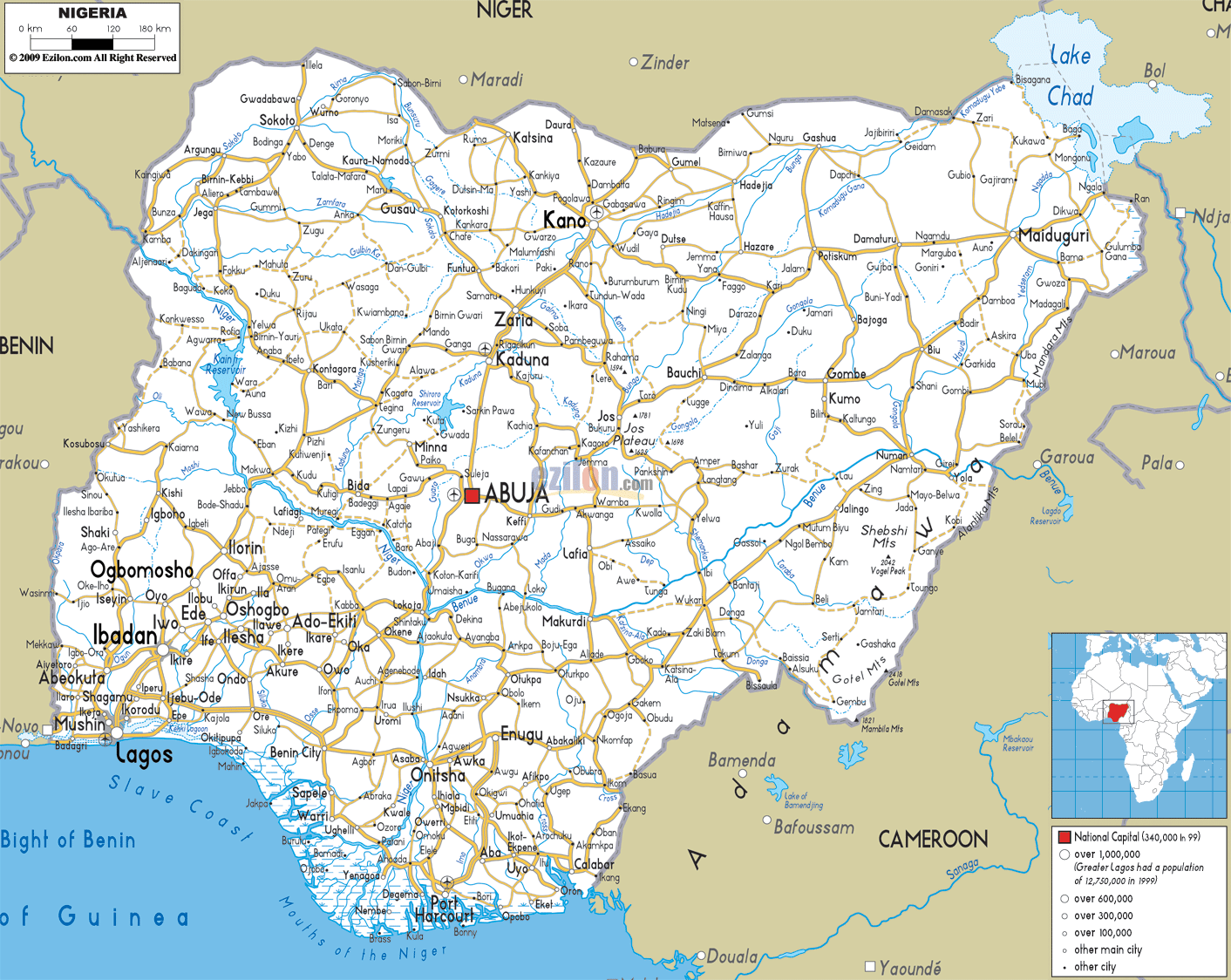
ABUJA, Nigeria -- Dozens of people are feared dead in an explosion that blasted through a busy commuter bus station on the outskirts of Nigeria's capital, Abuja, before 7 a.m. (0200 Eastern) Monday as people were traveling to work.
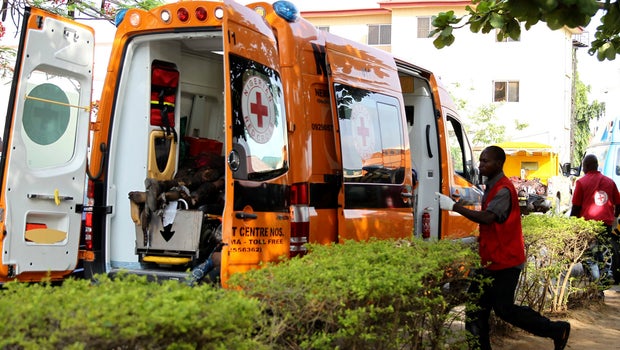
Reporters saw rescue workers and police gathering body parts and ambulances rushing the wounded to the hospital.
Suspicion immediately fell on the Boko Haram terrorist network that has been threatening to attack the capital, in the middle of the country and hundreds of miles from its traditional base in the northeast, where it has killed nearly 1,500 people this year. The militants' violent campaign poses the greatest threat to the cohesion and security of Africa's biggest oil producer as the country prepares for elections in February 2015.
Monday's blast ripped a hole 4 feet deep in the ground of Nyanya Motor Park about 10 miles from the city center and destroyed more than 30 vehicles, causing secondary explosions as their fuel tanks ignited and burned.
"I can't count the number of people that died. They took them in open vehicles. People were running and there was confusion," said civil servant Ben Nwachukwu.
 Nigeria -bomb.jpg 2x"/>
A Red Cross worker runs towards an ambulance carrying victims of a bomb blast at the Asokoro General Hospital in Abuja, April 14, 2014.
REUTERS
Security personnel belatedly cordoned off the area and a bomb detonation team was combing it for secondary explosives, a common occurrence here.
The explosion appeared to come from a vehicle at about 6:45 a.m., according to the National Emergency Management Agency. "It affected quite a number of people because it was still very early in the morning and there was a lot of traffic," according to the agency's Air Commodore Charles Otegbade. He did not give a death toll.

There was no immediate claim for Monday's rush-hour explosion though bus stations are a favored target of Nigeria 's Islamic extremists.
The Boko Haram terrorist network claimed responsibility for a 2011 suicide bombing by two explosives-laden cars that drove into the lobby of the United Nations office building in Abuja. It killed at least 21 people and wounded 60.
Last week, Boko Haram suspects detained at the State Security Service headquarters in Abuja, next door to the residence and office of President Goodluck Jonathan, staged a failed jailbreak in which it is suspected that they had outside help. The agency said 21 detainees were shot and killed and two agents wounded in a shootout that lasted more than two hours.
The militants are blamed for attacks in northeast Nigeria that have killed more than 50 people in the past five days, including eight teachers living at a boarding school that had been closed because of frequent attacks on schools in which hundreds of students have died.
Boko Haram - the nickname means "Western education is forbidden" - has been attacking schools, villages, market places and military barracks and checkpoints this year in increasingly frequent and deadly attacks. Its mission is to force an Islamic state on Nigeria , Africa's most populous nation of some 170 million people divided almost equally between Muslims living mainly in the north and Christians in the south.
The military has claimed that it has the extremists on the run with near-daily air bombardments and ground assaults on hideouts in forests and mountain caves along the border with Cameroon.
http://www.cbsnews.com/news/explosion-at-bus-station-in-nigerias-capital/
Research and Markets: Nigeria's Pharmaceutical Market Is Forecast To Post A Compound Annual Growth Rate (CAGR) Of 9.97% Over A Five-Year Forecast Period To 2014
DUBLIN--(BUSINESS WIRE)--Research and Markets(http://www.researchandmarkets.com/research/00e8bb/nigeria_pharmaceut)
has announced the addition of the "Nigeria
Pharmaceuticals and Healthcare Report Q2 2010" report to their
offering.
The Nigeria Pharmaceuticals and Healthcare Report provides industry
professionals and strategists, corporate analysts, pharmaceutical
associations, government departments and regulatory bodies with
independent forecasts and competitive intelligence on Nigeria's
pharmaceuticals and healthcare industry.

In BMI's Q210 update of the Pharmaceutical Business Environment Ratings
for the Middle East and Africa (MEA) region, Nigeria remains third-last
of the 17 key regional markets and globally, only above Zimbabwe and
Kenya. A sizeable counterfeiting industry, poor healthcare funding,
corruption and a number of other issues will conspire to keep Nigeria in
a similarly lowly position in the MEA matrix over the coming months,
despite its dynamic growth prospects and positive economic outlook.
Having been valued at NGN90.04bn (US$600mn) in 2009, Nigeria's
pharmaceutical market is forecast to post a compound annual growth rate
(CAGR) of 9.97% over BMI's five-year forecast period to 2014, reaching
NGN144.8bn (US$1.18bn). Measured in US dollar terms, the rate of growth
will be even stronger, at over 14.3%, as the naira gains strength.
Growth opportunities are also evident in the wider healthcare industry
as the government increasingly recognises the need to improve patients'
access to and the quality of medical services. To this end, in Q409, the
government began negotiations with India's Apollo Hospital Group to
enter joint investment projects for establishing private hospitals in
the country. The Nigerian Health Minister also stated that Apollo would
be required to secure its own supply chain to ensure participation,
although a nation-wide improvement of hospital provision is a long way
off. According to Indian newspaper Hindu Business Line, around US$250mn
leaves Nigeria annually in the form of payment for treatment in foreign
hospitals.
In the meantime, government's efforts to tackle trade in counterfeit
drugs continue apace. Borders and entry points into Nigeria are now
targeted with a new hand-held device called TruScan, which analyses the
content of medicines and validates whether they are genuine or not. The
regulatory agency has also alluded to the use of text message-based
technology to complement its new approach, which is aimed at making
consumers more vigilant against the use or sale of illegal or
counterfeit medicines. However, the aforementioned development will have
little real impact on the national counterfeiting issue, as the
fundamental problems surrounding the regulation of the pharmaceutical
industry are yet to be properly addressed.
BMI also forecast that the already substantially negative Nigeria .200.young.muslims.protect.christians.from.attack/45069.htm">Nigerian trade
balance in pharmaceuticals will deepen further, to US$337mn in 2014.
Authorities which are aiming for the overly optimistic target of 2015 as
the year of reaching self-sufficiency in terms of drug production have
mooted the banning of a selection of foreign drugs from entering the
country, a strategy strongly opposed by the Association of
Pharmaceutical Importers (APIN) in Nigeria. The body cautioned that
access to medicines would be severely hampered by such moves, as the
local industry is unable to meet the demand partly due to manufacturing
capacity limitations, but also as a result of frequent power outages and
the lack of access to bank loans. Therefore, foreign generics players,
including an increasing number of Indian and Pakistani companies, will
continue to have plentiful opportunities for supplying the Nigerian
market.
Key Topics Covered:
Executive Summary
SWOT Analysis
Pharmaceutical Business Environment Ratings
Nigeria Market Summary
Recent Regulatory Developments
Intellectual Property Regime
Counterfeit Drugs
Recent Developments in Regards to Counterfeit Drugs
Table: Implementation Key To Success Now
Maternal and Child Health
Communicable Diseases
HIV/AIDS
Recent Healthcare Sector Developments
Traditional African Medicine
National Drug Policy
Medical Devices
Recent Developments In The Medical Devices Market
Table: Nigeria Free Zones: Key Incentives
Industry Forecast Scenario
Table: Nigeria Economic Activity, 2005-2014
Prescription Drug Market Forecast
Generic Drug Market Forecast
OTC Drug Market Forecast
Pharmaceutical Trade Forecasts
Competitive Landscape
Pharmaceutical Industry
Recent Foreign Company Developments
Research and Development
Company Monitor
Country Snapshot: Nigeria Demographic Data
Companies Mentioned:
Nigerian-German Chemicals PLC (NGC)
Emzor
Fidson Healthcare
Archy
Neros Pharmaceuticals
Drugfield Pharmaceuticals Limited
Neimeth
Pfizer
Novartis
Sanofi-Aventis
GlaxoSmithKline (GSK)
Merck & Co.
For more information visit http://www.researchandmarkets.com/research/00e8bb/nigeria_pharmaceut.
http://www.businesswire.com/news/home/20100319005766/en/Research-Markets-Nigerias-Pharmaceutical-Market-Forecast-Post
The Week in Photos: March 28 - April 3, 2015 Photos

An Iranian boy flies a kite during the ancient festival of Sizdeh Bedar at the Pardisan Park in Tehran, Iran, April 2, 2015. Iranians flocked to parks and wilderness on the 13th day of the Iranian new year to mark the festival, a legacy from pre-Islamic era. Sizdeh means 13 and Bedar means day out in Persian and it is believed unlucky to stay indoors on Sizdeh Bedar which means getting rid of number 13.
Vahid Salemi/AP Photo
A home with a swimming pool sits near a hillside, April 2, 2015, in Altadena, Calif. On April 1, California Gov Jerry Brown ordered a mandatory 25 percent overall cutback in water use by cities and towns, but not farms. The water crackdown comes as California moves toward its fourth summer of drought after record low winter snowfall.
Ringo H.W. Chiu/AP Photo
New Ford trucks are seen at a parking lot of the Ford factory in Sao Bernardo do Campo, Brazil, April 2, 2015.
Paulo Whitaker/Reuters
More than 120 Louisville Firefighters continue to battle the blaze in building six at the General Electric Appliance Park complex in Louisville, Ky., April 3, 2015. The fire broke out in a non-production building, creating huge columns of smoke. GE spokeswoman Kim Freeman says there are no known injuries.
Timothy D. Easley/AP Photo
U.S. Secretary of State John Kerry, U.S. Under Secretary for Political Affairs Wendy Sherman, second right and staff watch a tablet in Lausanne, Switzerland as President Barack Obama makes a state address on the status of the Iran nuclear program talks, April 2, 2015. A preliminary nuclear deal between Iran and six world powers is a firm basis for a future accord that could end a 12-year nuclear standoff between Tehran and the West.
Brendan Smialowski/Reuters
Camels race during Al Marmoom Heritage Festival at the Al Marmoom Camel Racetrack, April 2, 2015, in Dubai, United Arab Emirates. The festival promotes the traditional sport of camel racing within the region.
Francois Nel/Getty Images
Paramedics help a student who was injured during an attack by gunman from Al-Shebab, the al-Qaeda linked group, on the Garissa University College campus in Garissa, Kenya, April 2, 2015. A reported 147 students were killed, according to the Kenya'??s National Disaster Operation Center.
Carl De Souza/AFP/Getty Images
A Catholic devotee carries a cross as a form of penance during holy week, April 2, 2015, in Mabalacat, Philippines. The brutal practice is a form of reenactment of Christ's suffering before being nailed to the cross with thousands of Filipino faithfuls still practicing the act to this day as a form of popular piety.
Dondi Tawatao/Getty Images
Supporters with painted bodies sit on a vehicle as they celebrate outside the office of the All Progressives Congress (APC) party after president-elect Muhammadu Buhari won the presidential election, Abuja, Nigeria , April 1, 2015.
Akintunde Akinleye/Reuters
Former U.S. Secretary of State Hillary Clinton and Chirlane McCray, the wife of New York City mayor Bill De Blasio, share a laugh while they attend the early childhood development initiative Talk to You Baby" in Brooklyn, New York, April 1, 2015.
Kathy Willens/Reuters
Relatives apply makeup to the face of a Tai Yai boy during the Poy Sang Long Festival, April 1, 2015, in Mae Hong Son, Thailand. Poy Sang Long is a Buddhist novice ordination ceremony of the Tai Yai, an ethnic group of Shan State in Myanmar and northern Thailand. Young boys aged between 7 and 14 are ordained as novices to learn the Buddhist doctrines.
Taylor Weidman/Getty Images
A man from the La Mar district of Ayacucho sings in Quechua with a Peruvian national flag as he performs in the Vencedores de Ayacucho dance festival in Lima, Peru, March 29, 2015. The different dance troupes that perform during the one-day competition typically bring a representation of Peru's national flag to assert their nationality as well as their ethnic background.
Rodrigo Abd/AP Photo
Heather Mack holds her baby in a cell before her sentence demand trial, March 31, 2015, in Bali, Indonesia. Indonesian prosecutors asked a court to sentence Heather Mack to 15 years and Tommy Schaefer to 18 years in jail. The pair are accused of murdering Mack's mother, Sheila von Wiese-Mack, whose body was found stuffed inside a suitcase in the back of a taxi outside a luxury Bali hotel in August 2014.
Agung Parameswara/Getty Images
Agricultural greenhouses are damaged by gale winds, April 1, 2015, in Yuncheng, China.
ChinaFotoPress via Getty Images
A cargo ship plies up the Mississippi River towards New Orleans in Plaquemines Parish, La., March 31, 2015.
Gerald Herbert/AP Photo
Georgia Ball Keely, 4, holds still as a Danaus Chrysippus or 'plain tiger' butterfly lands on her nose during a media opportunity at the Natural History Museum in London, March 31, 2015. Some hundreds of live tropical butterflies will fill the butterfly house for the returning exhibition called 'Sensational Butterflies' open at the museum from April 2 until Sept.13.
Kirsty Wigglesworth/AP Photo
A general view shows solar panels to produce renewable energy at the photovoltaic park in Les Mees, France, March 31, 2015. The solar farm of the Colle des Mees, the biggest in France, consists of 112,780 solar modules covering an area of almost 500 acres of land and representing 100 MW of power.
Jean-Paul Pelissier/Reuters
Relatives of landslide victims mourn during a funeral in the village of Laden at Chadoora, Kashmir, March 31, 2015. Emergency workers in Indian Kashmir have recovered 15 bodies including that of a three-week-old baby after a landslide triggered by heavy rains buried several houses.
Tauseef Mustafa/AFP/Getty Images
SS. James and John School principal Marilyn McWhorter carries the monstrance, used to display the consecrated Eucharist, in front of a burned out St. John Catholic Church in Benwood, W.Va., March 31, 2015, after flames ripped through the church on Monday night.
Scott McCloskey/The Intelligencer/AP Photo
View of smoke billowing from the Villarrica volcano, in Pucon, Chile, March 29, 2015. Part of southern Chile is on orange alert because of an increase in activity at the Villarrica volcano, just weeks after it erupted and forced thousands of people to evacuate.
Sebastian Escobar/AFP/Getty Images
A young Nigerian /a> girl walks past election posters, some showing presidential candidate, Muhammadu Buhari, in Kaduna, Nigeria, March 30, 2015. Nigerians are waiting in hope and fear for results of the tightest and most bitterly contested presidential election in the nation's turbulent history.
Jerome Delay/AP Photo
Hooded penitents from the La Paz brotherhood walk to the church to take part in a procession in Seville, Spain, March 29, 2015. Hundreds of processions take place throughout Spain during the Easter Holy Week.
Emilio Morenatti/AP Photo
Women throw their bras up in the air during the Pink Bra Bazaar Rally at Trocadero Square next to the Eiffel, March 29, 2015, in Paris. Pink Bra Bazaar is a charitable organization that aims to educate about breast health and supports women with breast cancer.
Chesnot/Getty Images
Young boys play on a destroyed building near a sign reading "Kobane" in the Syrian town of Kobane, also known as Ain al-Arab, on March 28, 2015. Islamic State (IS) fighters were driven out of Kobane on Jan. 26 by Kurdish and allied forces.
Yasin Akgul/AFP/Getty Images
Young boys play on a destroyed building near a sign reading "Kobane" in the Syrian town of Kobane, also known as Ain al-Arab, on March 28, 2015. Islamic State (IS) fighters were driven out of Kobane on January 26 by Kurdish and allied forces.

Yasin Akgul/AFP/Getty Images
A paddleboarder floats by Lone Rock on Lake Powell, March 29, 2015, near Big Water, Utah. As severe drought grips parts of the Western United States, a below average flow of water is expected to flow through the Colorado River Basin into two of its biggest reservoirs, Lake Powell and Lake Mead.
Jung Yeon-Je/AFP/Getty Images
A paddleboarder floats by Lone rock on Lake Powell on March 29, 2015 near Big Water, Utah. As severe drought grips parts of the Western United States, a below average flow of water is expected to flow through the Colorado River Basin into two of its biggest reservoirs, Lake Powell and Lake Mead. Lake Powell is currently at 45 percent of capacity and is at risk of seeing its surface elevation fall below 1,075 feet above sea level by September, which would be the lowest level on record.
Justin Sullivan/Getty Images
http://abcnews.go.com/International/photos/week-photos-30013729
Nigeria launches new investigation of 2014 kidnap of Chibok girls | Reuters
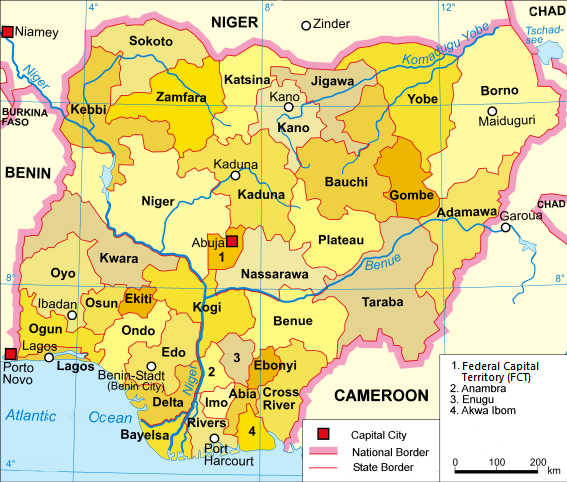
ABUJA Nigeria 's president Muhammadu Buhari has ordered a new investigation into the kidnapping of 219 schoolgirls by Islamist group Boko Haram in April 2014 from the town of Chibok, the presidency said on Thursday.
A statement said a panel would be announced soon by the National Security Advisor. The decision comes after parents of the girls and the Bring Back Our Girls (BBOG) movement marched to the presidential villa to demand a meeting with Buhari earlier on Thursday.
"I assure you that I go to bed and wake up every day with the Chibok girls on my mind," Buhari was quoted as saying in the statement after meeting some of the marchers.
"Securing the Chibok girls is my responsibility. The service chiefs and heads of our security agencies will tell you that in spite of the dire financial straits that we found the country in, I continue to do my best to support their efforts in that regard."
On April 14, Boko Haram militants raided a school while the girls were taking exams. They loaded 270 of them onto trucks. Around 50 escaped shortly afterwards.
There was a global outcry and threats by Boko Haram to sell the girls. Former president Goodluck Jonathan was heavily criticized for his slow reaction and Jonathan's wife at first said she doubted the kidnapping had actually happened.
After nearly a month, Jonathan set up a fact-finding committee that went to Chibok to establish whether the abduction happened and how many girls were missing.
Buhari's panel will have the remit to "unravel the remote and immediate circumstances leading to the kidnap of the girls by Boko Haram terrorists as well as the other events, actions and inactions that followed the incident", Thursday's statement said.
BBOG has kept the memory of the incident alive with frequent marches and Nigerian newspapers keep daily track of the number of days they have been missing.
Buhari won last year's election on a promise to quash the militant group as Jonathan was seemingly unable to do.
Buhari said at the end of December that he was open to negotiating with Boko Haram for the return of the girls if credible representatives of the group could be identified.
Boko Haram has been waging a six-year insurgency to establish an Islamist state in the northeast of Africa's biggest economy and pledged allegiance to Islamic State last year.
In the second half of 2014, it took over vast swathes of territory, mainly in Borno state where Chibok is located. Nigerian troops recaptured most of it with the help of forces from Chad, Niger and Cameroon, who themselves were increasingly being targeted by the Islamists.
Boko Haram has since reverted to raiding villages for provisions or hitting soft targets like places of worship and markets and are mainly around Lake Chad, the Sambisa forest reserve and the mountainous region bordering Cameroon.
(Reporting by Felix Onuah; Writing by Julia Payne; Editing by Andrew Roche)
http://www.reuters.com/article/us-nigeria-violence-idUSKCN0US2G820160114
Official: Nigeria won't swap schoolgirls for militants
ABUJA, Nigeria - Nigeria's government is ruling out an exchange of more than 270 kidnapped schoolgirls for detained Islamic militants, Britain's top official for Africa said Wednesday.
President Goodluck Jonathan has "made it very clear that there will be no negotiation with Boko Haram that involves a swap of abducted schoolgirls for prisoners," Mark Simmonds, British foreign office minister, told journalists in the Nigerian capital, Abuja.
But Nigeria's government will talk to the militants on reconciliation, Simmonds said, after a meeting with Jonathan.
"The point that also was made very clear to me is that the president was keen to continue and facilitate ongoing dialogue to find a structure and architecture of delivering lasting solution to the conflict and the cause of conflict in northern Nigeria," Simmonds said.
He spoke before Nigeria 's Defense Ministry announced that extremists had again attacked the remote northeastern town of Chibok, from which the schoolgirls were abducted on April 15.
The ministry said several insurgents and four soldiers were killed in the firefight Tuesday.
Soldiers who were there told The Associated Press that at least 12 soldiers were killed, and that angry soldiers later fired at the car carrying a senior officer who came to a review of the bodies Wednesday. The witnesses spoke on condition of anonymity because they want to keep their jobs.
The ministry said the soldiers fired into the air in protest.
Boko Haram abducted more than 300 schoolgirls from a school in Chibok in the northeastern state of Borno on April 15. At least 276 of the girls are still being held captive by militants who have threatened to sell them into slavery, sparking outrage at home and abroad over the government's apparent failure to rescue then.
In a video released on Monday, Boko Haram's leader says he will free the girls only if the government releases jailed members of his group. The footage was verified as authentic by Nigerian authorities, who said 54 of the girls had been identified by relatives, teachers and classmates who watched the video late Tuesday.
Nigerian government officials have given conflicting responses to Boko Haram's offer of a swap.
One senior official said on Tuesday that "all options" are now open - including negotiations or a possible military operation with foreign help - in efforts find the missing girls.
It was not immediately possible to confirm Simmonds' comments with Nigerian officials.

A student wears red ribbons to express solidarity with the abducted Nigerian schoolgirls from Chibok, as she does a math exercise at the Regent Secondary School in Abuja, May 14, 2014.
JOE PENNEY, REUTERS
Reuben Abati, a spokesman for the Nigerian presidency, said in a statement late Wednesday that Jonathan met with Simmonds at the presidential palace in Abuja to discuss the missing girls and Britain's role in trying to rescue them. The statement said Simmonds "reassured President Jonathan of Britain's commitment to giving Nigeria all required assistance to find and safely rescue the abducted girls."
Britain and the U.S. are actively helping Nigeria's government to find and rescue the girls.
The British government has said a team of security experts sent to Nigeria will consider "not just the recent incidents but also longer-term counter-terrorism solutions to prevent such attacks in the future and defeat Boko Haram."
Boko Haram has killed more than 1,500 people this year in a campaign of bombings, massacres and mass kidnappings.
2014 The Associated Press. All Rights Reserved. This material may not be published, broadcast, rewritten, or redistributed.
http://www.cbsnews.com/news/official-nigeria-wont-swap-schoolgirls-for-militants/
UPDATE 4-Nigeria military promises neutrality after poll delay | Reuters
* Security forces urged electoral commission to delay poll
* Opposition leader says soldiers besiege his Lagos house
* Naira currency further hit by political instability (Adds more from Jonathan TV interview, paragraph 15)
By Tim Cocks
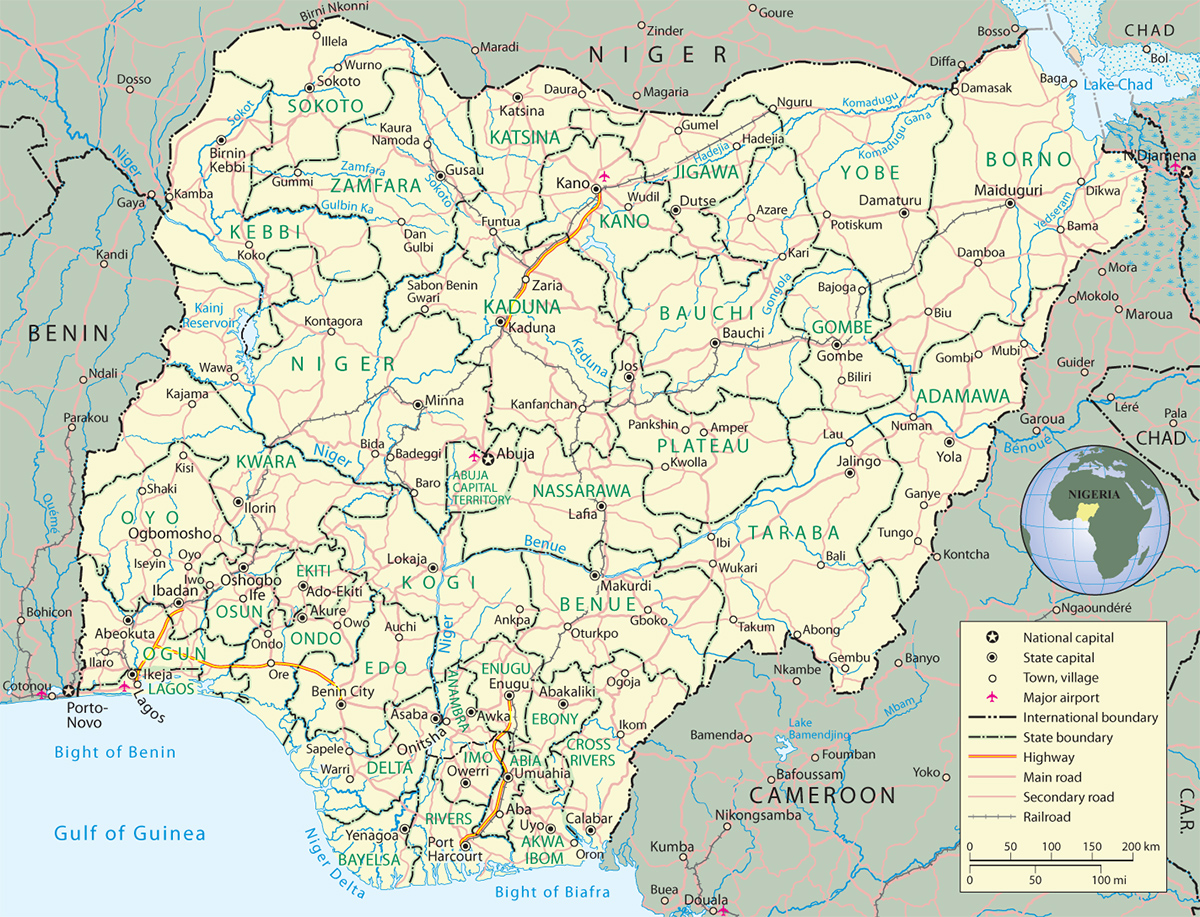
ABUJA, Feb 11 Nigeria's military pledged not toget involved in party politics on Wednesday, after concerns grewabout its role in pushing for the country's presidentialelection to be delayed by six weeks.
The military faced accusations of interference when thechairman of the electoral commission, Attahiru Jega, revealedthat the office of the National Security Advisor had written tohim saying that unless he delayed the Feb. 14 election, it couldnot guarantee security.
It urged a six-week delay to enable the military to containthe Islamist Boko Haram insurgency in the northeast of thecountry.
On Wednesday, defence spokesman Major-General ChrisOlukolade noted "the palpable tension being generated ... withregards to the roles of the Nigerian military in the ongoingpolitical activities and recent developments, especially inrelation to electioneering."
"It is important to reassure Nigerians that the militarywill remain professional, apolitical and non-partisan in alloperations ... related to (elections)," he said in a statement.
Fears that Nigeria's military, which has ruled the countryfor more than half of the period since independence from Britainin 1960, may be slipping back into old habits have spookedinvestors and hit the ailing naira currency at a time whenclouds were already gathering over Africa's top economy becauseof the fall in world oil prices.
There have also been reports in the local press that themilitary colluded with the ruling People's Democratic Party(PDP) to try to influence last year's governorship election inEkiti state, a claim the military has not directly commented on.
Further delays to or a cancellation of the presidentialelection, now set for March 28, could trigger unrest, especiallyin opposition strongholds in the largely Muslim north.
Addressing local journalists in a televised interview onWednesday, President Goodluck Jonathan said "some very dangeroussignals" on security meant the election had to be delayed. He rejected claims by the opposition that his party was trying to scupper the vote.
"A lot of people are using the delay in the elections tomisinform people and create suspicion," he said.
MARKET TURMOIL
Nigerian dealers pulled the plug on electronic trading inthe naira on Wednesday after the currency slid past 200 to thedollar on fears the postponement of the election could trigger aconstitutional crisis.
Nigeria's decision to delay the poll on the advice ofsecurity forces was a worrying echo for some of the annulment of1993's democratic vote by a military government.
Jonathan's PDP had pushed for a delay, while his mainopponent, Muhammadu Buhari of the opposition All ProgressivesCongress (APC), himself a former military ruler, had called forthe vote go ahead on time, arguing that a six-year oldinsurgency was hardly going to be solved in six weeks.
But the PDP also argued that the commission was not readybecause millions of voters had not picked up their ID cards.
"It's better that elections are done so that Nigerians will... believe that the elections are credible," Jonathan said,defending the delay on grounds that ID cards needed to bedistributed. "I want a situation where every Nigerian (who iseligible) can vote."
On Wednesday, the leader of the APC, Bola Tinubu, a formerLagos governor, was quoted in the local press as saying soldiershad besieged his house in the wealthy, palm-lined suburb ofIkoyi.
"Jonathan's government has through the service chiefs stageda coup against Nigerians and the constitution and now wants tosilence his critics. I will not be muzzled through the barrel ofthe gun," they quoted him as saying.
A spokesman for Tinubu did not immediately respond to arequest for comment. The military also did not immediatelyrespond to a request for comment on the alleged siege.
The military has faced criticism of its failure to quell theBoko Haram insurgency, although Jonathan suggested on Wednesdaythat better cooperation from neighbours Chad, Niger and Camerooncould be a turning point.
"We're getting maximum cooperation from the neighbouringcountries, which we were never getting before," he said, addingthat there would be a significant improvement in security in thetroubled northeast "in the next four weeks".
Chadian soldiers killed 13 fighters from Boko Haram in abattle in the Nigerian town of Gambaru on Wednesday, the Chadianarmy said in a statement. (Editing by Giles Elgood)
http://in.reuters.com/article/nigeria-military-idINL5N0VL3I220150211
Nigerian military ill-equipped in fight with Boko Haram
Her mouth twists, contorting her young face, tears welling in her already reddened eyes.
"I don't know... I pray to God to give him another chance," she finally manages to stutter.
Her sadness is heavy and blankets both of us.
She tells me she has three children, and they last saw their father four months ago when he went back to his army unit on the front line in Nigeria's battle with the radical Islamist extremist group Boko Haram.
Satellite images show devastation of Boko Haram attacks, rights groups say
His friends last saw him bloodied and shooting as Boko Haram fighters advanced and they all fled.
If all this wasn't trauma enough, the young woman says the army has deserted her, too.
"They didn't tell me anything, they still haven't told me what happened and they didn't pay me anything and no one is feeding us in the barracks," she said.
We are in northern Nigeria, a few hours' drive north of the capital where the mostly Muslim north meets the mostly Christian south.

Just last month, a double suicide bombing killed 12 people in a busy central market in the region.
Driving northeast of here toward the borders with Chad, Cameroon and Niger puts you in the heart of Boko Haram territory -- a land mass the size of Belgium.
So it's no surprise that the area is home to many thousands of troops, and, as I am finding out, it's also the backdrop of many more heart-wrenching stories.
A mile or so from his base, I meet a soldier on a remote windswept hill. He is a veteran of African Union and United Nations peacekeeping missions in Liberia and Sudan, a professional soldier. We sit on plastic chairs as he tells me his story.
He, too, was left on the battlefield by his comrades as they fled for safety in the face of a Boko Haram attack. He doesn't blame them.
"The major problem the soldiers have is they don't have the equipment to fight," he says.
Boko Haram has anti-aircraft guns, which he says are accurate up to three-quarters of a mile. All the Nigerian military has, he says, are AK47 small machine guns, accurate up to a few hundred meters.
Often the Nigerian soldiers are given only 60 bullets each, so they quickly run out. Boko Haram, he says, has large supplies of ammunition and more fighters.
Although the Nigerian soldiers do win some fights, he says they are regularly forced to turn tail and run for their lives by the sheer volume of gunfire from Boko Haram fighters.
It took him three days -- on foot, alone -- to get back to his base, 70 kilometers away. When he arrived, his wife told him to quit the army, but his troubles were only just beginning.
Army medics refused to pay the $200 for medicine to treat his injuries. Morale in the army is sinking, he says.
That night, I meet a young officer, who, like the other soldier, is not authorized to talk to me. Our conversation is held in a hurry in a tiny darkened hut that sells biscuits and fizzy drinks at a roundabout on the outskirts of a town.
Corruption, he tells me, is the root of the Nigerian military's problem.
"Not just the generals... everybody in the country wants to get rich by any means necessary," he says.
The soldiers don't ever benefit from the billions allocated to the defense budget, he explains. He even had to buy his own uniform.
"The troop morale is actually very low, very low, because we are not issued a uniform, we buy the uniforms ourselves," he explained.
The other soldier I met on the hill told me this, too. When they go into battle, no one has the same uniform, so when they run from Boko Haram it's chaos. They don't know who is friend or foe -- whom to shoot and whom to help.
Most soldiers live in fear, the young officer tells me. A fear of what will happen to them, and how long they can survive in this battle, he says.
The worrying doesn't stop there. They see enough war widows on the base to know the grim reality of what can happen to their loved ones if they die.
A widow I meet explains. Her husband was killed in battle over a year ago, she tells me.
"When my husband died, they never called me to tell me that I lost my husband," she says. "They buried him without notifying me."
She gets no army pension, and she says there are many more like her: they feel abandoned, afraid to speak out because they still live in the barracks.
Government officials tell us they will look into these shortcomings, that they are working on getting better weapons for the troops.
If they do, according to the soldiers I met, it will easily turn the tide in this war.
Nigerian president in Boko Haram territory, spokesman says
http://www.cnn.com/2015/01/15/africa/nigeria-military-families-boko-haram/


